


Autoimmune unknown – Jane’s Story
Jane shares her father’s story of heart surgery and encephalitis before he sadly passed away.
Before everything changed
Many of the males in Dad’s family died before retirement from heart conditions, and Dad fully expected the same. He had retired from a distinguished career in the Metropolitan Police, did other work after that, and then fully retired. He never really stopped though: always contributing to the community, volunteering, living for sport, his family and some fun.
Heart history and sudden surgery
In 2005, Dad had stents fitted, but we had no idea they only lasted for a set period of time. Ten years later he was treated for asthma, which now looks like an incorrect diagnosis. By spring 2022, he was volunteering in his local charity shop, a season ticket holder for his beloved Charlton FC, and looking forward to a trip to New Zealand. But he was becoming more tight chested and worried. In June 2022 he saw a doctor, was sent to hospital and, in just under two weeks, had an unplanned quintuple heart bypass.
When recovery did not feel right
Dad didn’t recover as he should. We thought he now had the heart of Superman, but he had no motivation, said his head felt funny, became subdued, lost interest in everything and was confused at times, forgetting simple tasks and who people were. He would be sick when travelling and sometimes at other times too. His tummy was tender and uncomfortable. He knew something was wrong but could not articulate it. At multiple cardiology appointments, we kept saying Dad wasn’t right and thought it was linked to not recovering from surgery. We even arranged private counselling, thinking it might help because he was so low and not himself.
Searching for answers
From July 2022 to March 2023, we saw little curiosity or action. An emergency doctor appointment put Dad on a two-week pathway, and an MRI was requested, but the waiting list was long. We arranged a private MRI the next day, thinking we were helping, but this led to the consultant neurologist taking Dad off the pathway and putting him back at the end of a long queue.
We couldn’t accept that. Dad was deteriorating quickly, so we wrote a strongly worded letter and hand delivered it to the consultant and doctor, explaining what was happening. The next day the neurologist called. He had not understood the full picture and asked us to take Dad to the emergency room. Dad was admitted locally and then transferred to a specialist neurological ward.
Becoming detectives for Dad
Dad had been a Detective, so we became Detectives for him. We traced and recorded travel, illnesses, symptoms and every possible clue, trying to help the medical team find what was wrong.
Life on the neurological ward
Dad’s hallucinations increased. At one point he wanted a camera to show us what he could see. He called Mum the Pope and my brother Jesus, when he hadn’t been particularly religious. The ward bathroom door number was the regimental number for the horses kept in there as their stables. He had jumpy movements, could often not feed himself, became doubly incontinent and could only just walk with two physiotherapists and a walking aid. He spent two months in the neurological centre, having around nine lumbar punctures and numerous tests. Antipsychotics and steroids were the main medications, continuing until the end. The medical team said his indicators were often contradictory and confusing, with white cell counts up to 210. His case was even taken to a global gathering. Viral encephalitis was considered, but we were advised the most likely cause was autoimmune. They also considered whether his body’s response to the heart bypass and lack of recovery had played a part, but it is impossible to prove.
Family advocacy and support
During this time, I was usually the contact for medical information, background and updates, keeping a spreadsheet of almost everything. Mum travelled every day to be with Dad, assisting with his care and sharing information. Dad was hard of hearing, diabetic and unable to communicate clearly, so advocates were critical. One brother flew home from New Zealand when we were told Dad might not survive; my other brother visited and shared information with the teams. The neurology team said they had never seen family support like it. It was harrowing and scary, including for Dad, but that advocacy was vital for his motivation and care.
Hospital transfers and difficult decisions
Once Dad was stabilised as much as possible, he was transferred back to his local hospital at the end of May 2023 and stayed another three months. He had limited physiotherapy and almost lost his ability to walk. He still was not reading, watching sport or showing interest in anything. Sometimes he engaged in conversation or got newspaper puzzles right; other times he scribbled things that made no sense. Neurological rehabilitation was considered, but because his engagement varied, it was decided he should move to a nursing home. Not knowing the options, or when to fight decisions, was very difficult.
After a couple of weeks in his first nursing home, Dad was readmitted to hospital with a urinary tract infection, dehydration and safeguarding concerns. During another month and a half in hospital, he continued to get UTIs and contracted Covid-19 during a heatwave, which was frightening because we knew his immune system was likely compromised.
Nursing homes, ongoing symptoms and daily care
Dad was discharged to his second nursing home in November 2023. He was very weak and bore little resemblance to the person before his heart operation. He still complained of stomach pain and vomited periodically, especially on the few times we could take him out locally in his wheelchair. Mum was getting two buses each way, every day, so as a family we wanted to support them both.
Dad moved to his third, most local nursing home in June 2024, so Mum could walk there each day. In every nursing home we struggled to help staff understand his sensitivities to light, sound and other aspects of his care. We laminated signs and shared leaflets, but it was a continuously exhausting cycle of communication and advocacy. Dad’s gastrointestinal issues continued, but further investigation became too difficult because of his frailty. He also had shingles, another scary time because we had been told a weakened response to an illness like that could be the end of him.
November 2024 was the last time Dad saw his neurologist in person. She was great with us as a family and seemed to enjoy Dad’s appointments. After that, appointments were online because Dad reacted so badly to travelling.
Holding on to moments of Dad
Through late 2024 and into 2025, Dad became increasingly sleepy and lost more abilities. His eyes were often closed, but his ears were still on full alert – ever the Detective. He would suddenly comment or join a conversation, then be asleep again seconds later. The main thing that encouraged him to open his eyes was an update or YouTube clip of the latest Charlton match.
Throughout Dad’s decline, he was smiley to everyone and always thanked them for their care, although he knew there was a lot wrong.
Final celebrations and the last hospital admission
In September 2025, Mum and Dad celebrated their diamond wedding anniversary and received a card from the King. We then had a small family gathering for Dad’s 81st birthday in November, where he thanked us all for being there. His tummy had been swollen and tender for a while and then worsened. About two weeks later, Dad was taken by ambulance to hospital in the middle of the night, with Mum and I close behind. He had a twisted bowel. After two weeks and several interventions, he was transferred to another local hospital. He was still smiling and thanking everyone – cleaners, nurses, consultants and caterers. A few days later, we were told Dad probably only had a few days to live. He had sepsis from a bowel infection.
Dad lasted just under 2 weeks, a week longer than expected. He died on 21st December the shortest day of the year and around 3.5 years after his heart operation that should have made him superman.
Why we are sharing Dad’s story
Dad’s trauma and decline is something I would not wish on my worst enemy, and we are still processing what we went through in the early stages of grief. But we know Dad would want his story to help educate families, carers, medical teams and the public. To families and carers: you know your person best, so use your voice, keep a diary of symptoms, results and changes, and share the clues that may help complete the jigsaw. Be part of the detective team. To medical teams; if a patient is not well, or recovering as they should from any kind of treatment or surgery, please consider the whole person. Link with colleagues across specialties, please be curious and explore possibilities like encephalitis. Not everyone presents the same, and some patients are not following aftercare because something else is wrong, not because they are lazy or lack motivation. Please listen to families and patients; they know their person.
Dad’s legacy
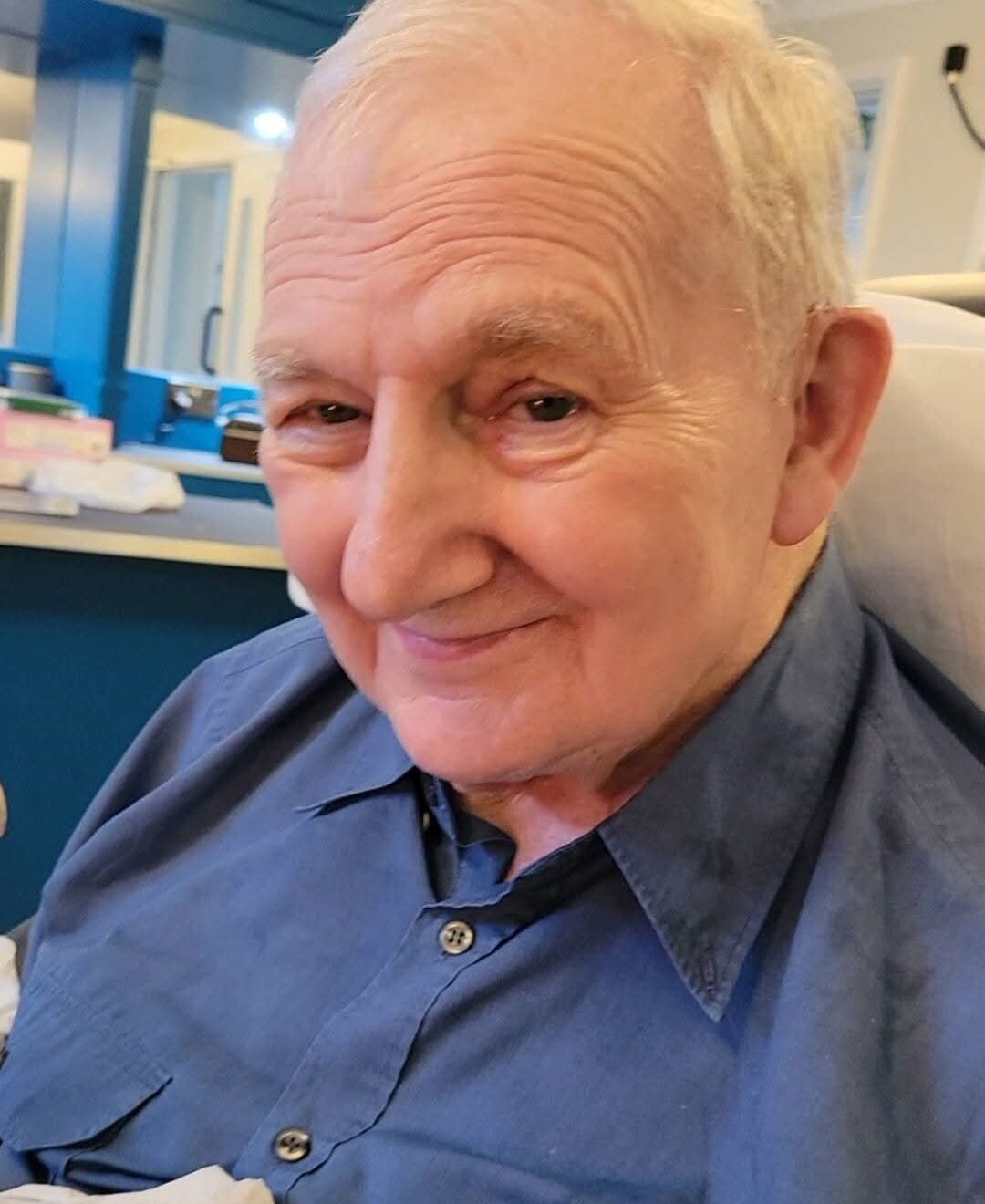
The photo you have is Dads 81st birthday, just 5 days before he was admitted to hospital and never came home. RIP Dad, we’ll work with Encephalitis International and your traumatic journey will not be in vain.
If you would like support following the death of a loved one, please contact our helpline.
Story published August 2026
Get help
Our support team are available from 9am to 5pm (GMT), Monday to Thursday, and 9am to 4.30pm (GMT) on Fridays.
To get in touch, simply call +44(0)1653 699599.
Contact our helpline