



Meningoencephalitis – Kelly’s Story about Mum, Karen
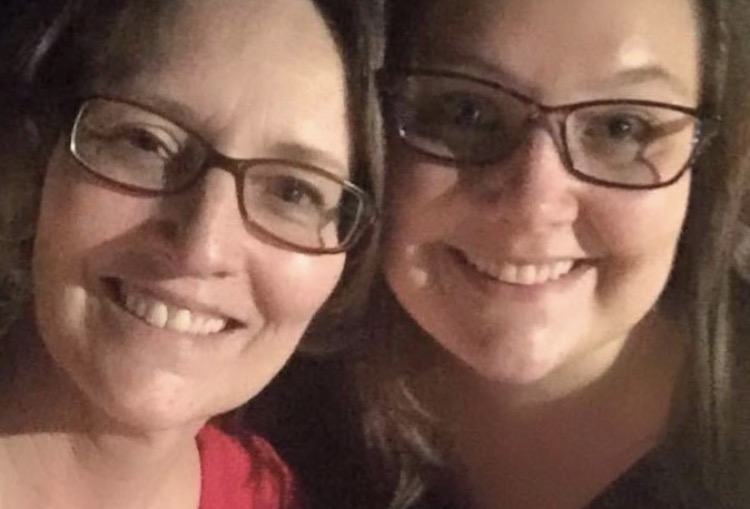
My mom, Karen, had what we assumed was the flu. She felt miserable, but nothing about it seemed beyond ordinary. That’s the thing about serious illness: it rarely announces itself.
I was 24, recently out of college and back living with my parents.
The day before she was admitted to the hospital, we had one of those fights that happen between mothers and daughters at that age – the kind born from two people who love each other deeply but haven’t yet figured out how to do it gracefully. I left the house certain there would be time to repair it later. I was young enough to still believe in the luxury of later.
My sister called. Mom was being admitted to hospital. I needed to come now.
I arrived just as she was being wheeled up from the emergency department. A nurse was running through orientation questions – routine, almost mechanical. When my mother couldn’t remember who the president was, something in me went quiet in a way I still remember. That was when I understood that this was not going to be a normal one week recovery.
Mom looked so ill. And the fight was still sitting between us, unresolved, suddenly enormous in a way that it hadn’t been when I’d stormed out the door.
The early explanations were frustratingly benign – a tension headache, maybe. But then came the order for a lumbar puncture (spinal tap), and the ground shifted. Her symptoms were outpacing the answers. She became delirious, having hallucinations – seeing things, smelling phantom flowers, saying things that didn’t belong to our reality. We didn’t know what was happening, only that we needed to stay close to her. We played memory games, asked her to name our pets. She could remember some. We had a lot of birds, and each name she couldn’t reach felt like a small, quiet loss.
The spinal tap confirmed herpes simplex virus meningitis. That diagnosis later evolved into meningoencephalitis. I’m still not entirely clear on the clinical progression – whether the infection had reached her brain from the start or spread over those early days. What I remember clearly is walking into her room one morning and finding wires attached to her head. Fear has a way of sharpening into something more precise in moments like that.
This was the early 2000s. I had a BlackBerry phone and a desperate need for information but found mostly statistics that weren’t kind. The internet was new enough that we still trusted it would have answers, and old enough to know how to bury you in the worst-case scenarios. I read until I had to stop reading.
There was no clear turning point – no morning I walked in and felt the tide reverse. Recovery moved the way it wanted to, slowly and without drama. After many days, she came home, and our living room became a kind of care ward. She had a PICC line. I learned to flush it and connect the small medicine ball that delivered her antivirals. I want to say I cared for her out of pure love, and I did – but I also know I was atoning for something. That unspoken apology was easier for me to offer through action than words.
She came home with a walker. She moved past it quickly. But she wasn’t entirely the same person who had gone in, and she hasn’t been since. Her fine motor skills shifted; her handwriting changed. What surprised me, though, was what came alongside those changes: she became lighter. More willing to be silly, to laugh, to let things go. I’ve wondered many times whether that shift came from the illness itself or from the experience of surviving it. I still don’t know. Maybe it doesn’t matter.
Our relationship has never been simple, and illness didn’t simplify it. But those weeks of caregiving did something – created a kind of closeness that lived underneath all the old complexity. It’s still there.
What has stayed with me, more than anything, is the particular cruelty of unfinished business. How dangerous it is to walk away from someone assuming the argument will keep. It almost didn’t.
My mother is, today, genuinely joyful. She laughs at her own jokes. She finds real pleasure in ordinary things. She is not what those early statistics suggested she might become. She is just herself – altered in some ways, but present, and here.
For anyone moving through something like this with someone they love: the outcome is not written yet. Survival is real. So is the strange, unexpected growth that can follow it. And so, sometimes, is laughter – even after encephalitis. Especially after encephalitis.
If you would like to share your lived experience of encephalitis please share your story with us via the story page on our website.
Story published August 2026
Get help
Our support team are available from 9am to 5pm (GMT), Monday to Thursday, and 9am to 4.30pm (GMT) on Fridays.
To get in touch, simply call +44(0)1653 699599.
Contact our helpline