



Encephalitis Unknown – Amjad’s Story
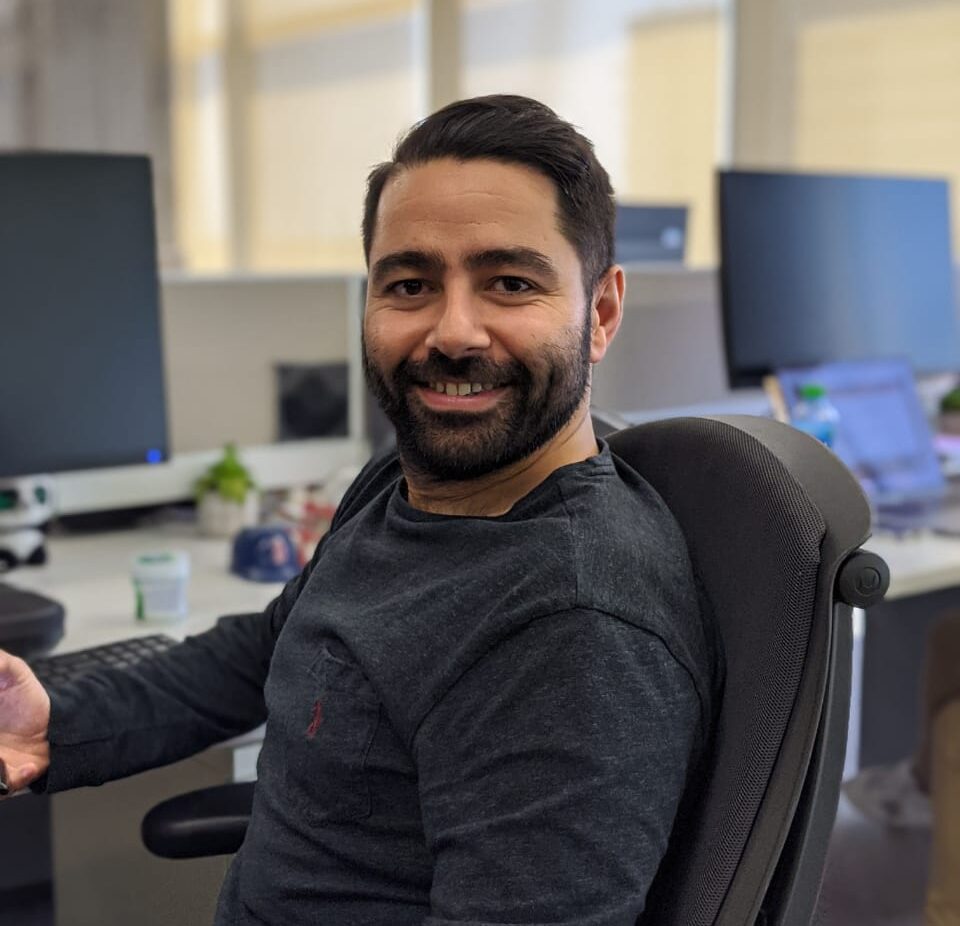
Amjad started with symptoms which led him to being treated for encephalitis. Here he shares his story.
Before Everything Changed
A little more than five years ago, I was on top of the world: 35 years old, married to the woman of my dreams, proud father of a two-month-old son, working at a company I truly enjoy with a team of incredibly talented people.
The next day I was heavy-eyed in a hospital bed fighting off an unknown condition that was attacking my brain. The medical prognosis for neuro-Behçet encephalitis (which we later came to discover) isn’t great: up to 10% of people die, up to 25% become dependent with residual neurological impairment.
Waking Into the Unknown
I woke up two days later disoriented and all kinds of messed up on painkillers and antiviral medications. I was well rested, something you really miss when you have a newborn at home. But mostly I was happy to wake up and not feel like someone was stabbing me in my brain with a hot knife.
Piecing Together What Was Lost
The details of the prior days and weeks I had to piece together from my wife and the people around me, because the memory loss and the brain damage had taken them from me. Towards the late part of the COVID-19 lockdown, November of 2020, I had been getting lots of headaches throughout the previous months. I always thought it was the increased workload at work followed by sleepless nights with our newborn. I was blaming the change in sleep and lifestyle, since I used to get mild headaches frequently throughout my adult life.
One night I woke up my wife, telling her my head was about to explode. It was only when she casually asked me about something we’d done that same day, something I had no recollection of, that things shifted. She started testing me with more questions and realized I couldn’t remember anything.
My brother came in the middle of the night and rushed me to the hospital in the midst of COVID-19 protocols. I don’t remember much of it, but I’m told the ER first tested me for COVID, and then decided to perform MRI scans. The results showed severe inflammation in the brain. I try to imagine what that scan must have looked like to the doctors reading it – the organ that holds everything I am, lit up and under siege. They started treating me with intravenous Acyclovir. The preliminary diagnosis at that stage was Herpes Simplex Virus (HSV) encephalitis.
I believe that medication saved my life. The headaches gradually went away and I started getting better. The Herpes Simplex Virus test results came back negative, but the doctors decided to continue the medication as my symptoms were receding and my condition was improving. Months later, after seeking other expert medical opinions, we realized it could have been an autoimmune neuro-Behçet disease that caused the encephalitis.
Living With the Aftermath
Weird things happen when your temporal lobes turn off. I lost a big chunk of my memory, major milestones like my son’s delivery, my wedding, my travels. Gone. All of it. But it didn’t fully hit me until after my last day in the hospital, when my brother was driving me home and I realized I didn’t know the way to the apartment I’d lived in for three years.
When I asked the doctors whether I would get those memories back, whether the parts of my brain that stored my life would ever come back online, they all steered the conversation toward it’s time to move on and think of your family. Two months later, I realized I needed to relearn everything I knew at work, and I was really good at what I did. That was probably the hardest part of moving on, and it’s still a work in progress. I tried to act normal, but I’m pretty sure I had chronic depression for well over two years, which is what my therapist told me when I finally started sessions with her.
So many awful things creep into your head when your mind betrays you. Anger, pity, and self-doubt. Why me? Will I be able to be fully there for my son? What is life going to look like going forward? Will I ever be great at what I do again? Has the life I’d known changed forever? I tried so hard not to let those thoughts change me or burden my days. But I’m sure they did.
These were feelings I’d had at certain points throughout my life, but this time it wasn’t just about me. It was bigger. It was about being a father who could play with his kid, a husband who could go on walks with his wife, and despite all the limitations, about getting my life back.
Gratitude
Somewhere in the middle of all of that, something broke open.
I sobbed the first time I got to read to my son and put him to bed again. And that is what I’m left with now: gratitude. For being alive. For being able to think. For being able to work. For the chance to be a partner to my wife, not someone else she has to take care of. For another day with my son. Life isn’t fair, but I’m grounded in the reality that all of this is a gift we don’t usually see – and that only makes me more grateful every day.
The Long Road Back
My goal through recovery was family and work. Not because I believed I would fully get them back, but because I knew my life would be better for trying. Fighting the fear surrounding my diagnosis with the pursuit of something bigger, a life lived without regret. It took around 700 days. 700 days of small victories and bigger setbacks, of countless hours of tests, MRIs, therapy, and just as many sleepless nights.
In the months that followed, I saw the best of humanity and was reintroduced to gratitude in a way I never expected. My wife has been a rock and my guiding light. I’m forever indebted to my neurologist and my therapist. My family, doctors, and friends lifted me up and taught me so much more about brains, life, and myself than I could have ever imagined.
And my son brought me life.
For anyone who was recently diagnosed with encephalitis and is reading this: hang on. Affirm life.
If you would like to speak to our support team about encephalitis, please contact our helpline.
Story published August 2026
Get help
Our support team are available from 9am to 5pm (GMT), Monday to Thursday, and 9am to 4.30pm (GMT) on Fridays.
To get in touch, simply call +44(0)1653 699599.
Contact our helpline