



Viral Encephalitis – Sharmila’s Story
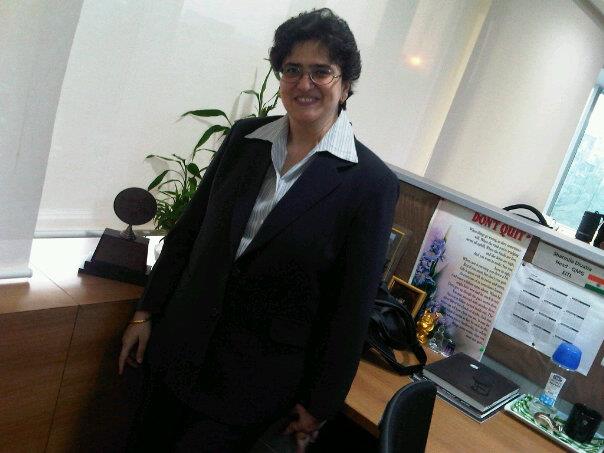
My experience of encephalitis showed me not only how suddenly serious illness can strike, but also how deeply it can affect every stage of life long after the initial crisis has passed.
I contracted encephalitis, a viral brain fever, in June 1970 when I was five years old. Before that day I was an ordinary child, with no sense that anything so serious could happen so quickly. The illness came on with terrifying speed. After returning home from school, I went to sleep, and from that point my condition worsened dramatically. I slipped into convulsions and then into a coma. What had seemed at first to be an ordinary day became a medical emergency within hours. That sudden and overwhelming onset is one of the things that has always stayed with me. Encephalitis is not an illness that gives much warning. Its symptoms can escalate rapidly, and in my case they became life-threatening almost immediately.
I was rushed to hospital, where the doctors diagnosed encephalitis. At that age I could not understand what was happening, but from what I have been told and from what I later came to understand, the diagnosis explained the severity of my condition. The infection had affected my brain, and the effects were profound. I remained unconscious for four weeks. In many ways, that period marked the dividing line in my life: there was life before encephalitis, and life after it. The treatment in those early stages was urgent and essential. My survival depended on hospital care, close monitoring and the skill of the medical staff who responded quickly to a critical illness. Although I was too young to remember the details of the medical treatment itself, I know that without that immediate care I would not have survived.
Regaining consciousness was not the end of the ordeal. Although the virus had not taken my life, it had left serious after effects. I lost motor control on the left side of my body and could not talk, see, hold or walk properly. Those losses were not temporary inconveniences; they changed the whole pattern of my childhood and shaped the years that followed. Functions that many people take for granted had to be relearned. Speech, movement, balance and coordination all became part of a long and difficult recovery. I had to depend on others and on sustained therapy in order to rebuild even the most basic skills.
Recovery demanded patience, resilience and years of extensive therapy. It took years before my speech became coherent, and months before I could walk straight again. Even then, recovery did not mean a complete return to how life had been before. The after effects of encephalitis can remain long after the acute illness is over, and that has certainly been true in my case. Even now, I live with residual difficulties including spasticity in my left hand, affected speech and cerebral palsy caused by the illness. These are not simply medical terms to me; they are part of everyday life. They influence how I move, how I communicate and how I manage ordinary tasks. In that sense, encephalitis was not only a childhood illness but a lifelong condition whose effects continued to unfold across the years.
Looking back, encephalitis was both a sudden medical crisis and a long journey of adjustment. Its symptoms were severe and immediate, the diagnosis came in hospital during a life-threatening emergency, and the treatment began with urgent medical care but continued through years of rehabilitation. The after effects did not disappear once the infection had passed; instead, they became part of the fabric of my life. Yet this experience also taught me something about endurance. Survival was only the first stage. What followed was the slow work of recovery, adaptation and perseverance. Encephalitis changed my life permanently, but it also revealed the strength that can grow in response to profound adversity.
If you would like to share your experience of encephalitis, you can us the submit your story form.
Story published June 2026
Get help
Our support team are available from 9am to 5pm (GMT), Monday to Thursday, and 9am to 4.30pm (GMT) on Fridays.
To get in touch, simply call +44(0)1653 699599.
Contact our helpline