


Viral encephalitis – Adrien’s Story
There Is Life After Encephalitis: My Journey of Adaptation and Independence
I was six years old when I became seriously ill in 1974/75. My family were initially told I had glandular fever, although later medical records from the hospital referred to a post-infectious viral encephalitis, possibly associated with mumps. I became critically ill and spent time in a coma. At the time, the outlook for my future was extremely poor. Doctors believed I would be severely disabled and even suggested I might spend my life in institutional care.
Prior to the illness I was sighted, developing normally, and had even been registered to attend a school for gifted children. The illness left me blind and with a number of long-term neurological disabilities that have affected me throughout my life. Afterward, I had to relearn many basic skills from the beginning.
My parents refused to accept the original prognosis. Instead, they brought me home and began the long process of rehabilitation themselves. I had to relearn many basic functions, and the process was extremely painful. I have been told that I would scream during exercises due to what was described as “brain pain”. I remember very little of this period, but it marked the beginning of a lifelong neurological journey.
As I grew up, it became clear that I was not going to follow a typical developmental path. I required speech therapy, struggled with aspects of learning, and was unable to recognise colours in the usual way. I went on to attend Valence School in Kent, where I learned independence, mobility, Braille, and many of the skills that helped me rebuild my life. Despite these challenges, my brain began to find its own ways of working.
One of the most important turning points came unexpectedly through CB radio. By communicating regularly with others, my speech improved significantly. It was a practical, real-world form of therapy that helped me develop communication skills in a way formal therapy had not fully achieved.
Over time, I developed strong compensatory abilities. Although I cannot fully visualise the world, I rely on memory, sound, and other senses to understand my surroundings. I remember what things looked like from early childhood, but I cannot form clear images of new objects.
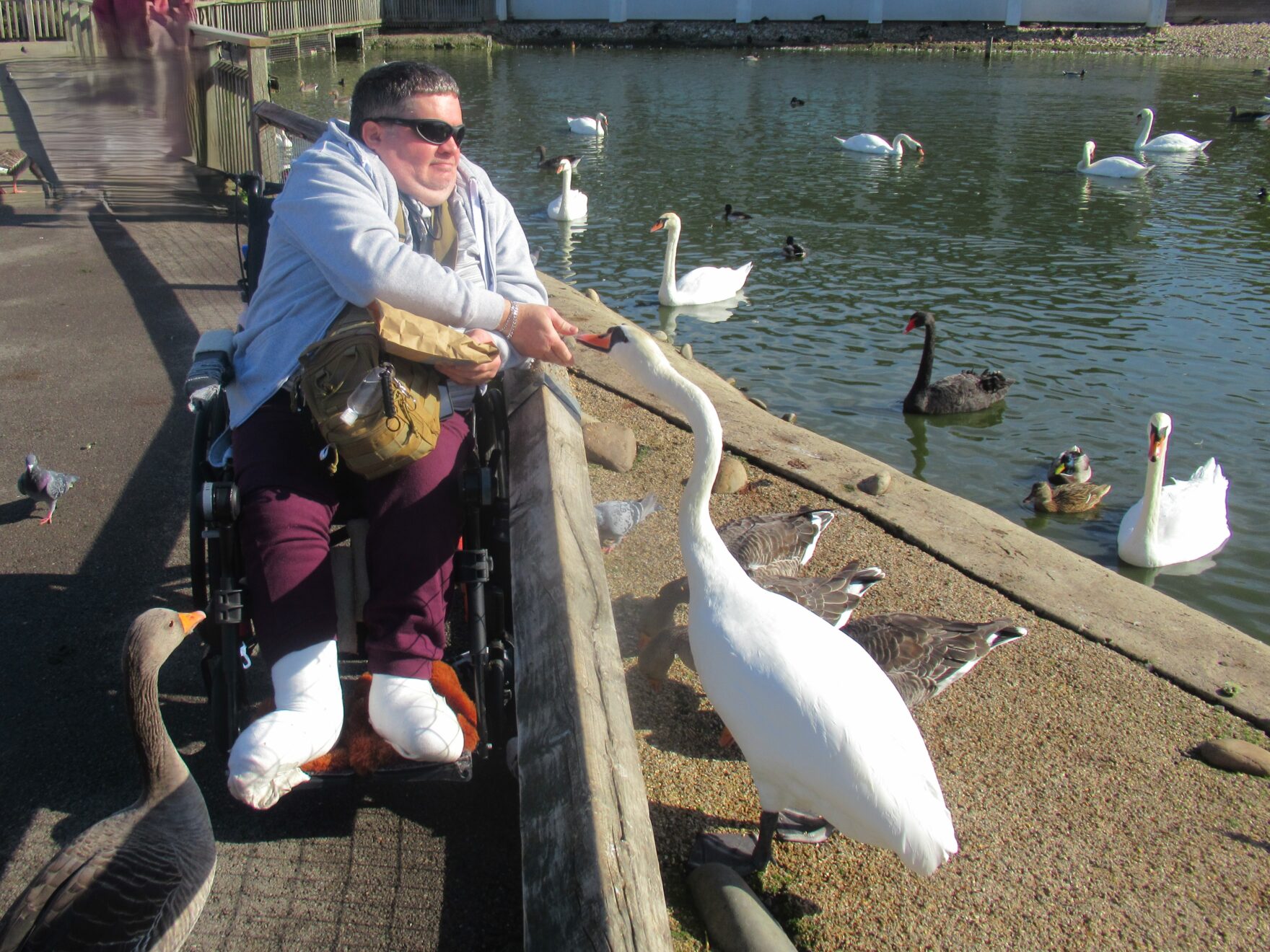
Despite my early prognosis, I went on to achieve a great deal. I gained qualifications, became involved in charity work, and developed technical skills. I have lived independently, travelled, worked with technology, enjoyed amateur radio, sailed on the tall ship Lord Nelson, and continued to pursue new opportunities and adventures. I also took part in activities such as scouting, archery, horse riding, and sailing. Later in life, I lived independently in France, learned the language, and managed my own day-to-day life.
One of the biggest challenges I undertook was returning to the UK in 2015. I arranged travel, accommodation, and support entirely on my own, navigating complex systems. Professionals later told me they could not understand how I managed it.
My philosophy has always been: I don’t know what I can do unless I try. That mindset has driven my independence throughout life.
However, in recent years, particularly following major health challenges including amputation, I have experienced increasing fatigue, sensory overload, and periods where my brain needs to stop. I now recognise that pacing and rest are just as important as determination.
Living with encephalitis is not a single event – it is a lifelong process. My journey has included challenges, setbacks, and periods of uncertainty, but also progress, independence, and achievement.
Looking back more than fifty years later, encephalitis remains a defining event in my life, but it has never defined who I am. I can see how much adaptation is possible over time. The brain can change, adjust, and find new ways of working, even many years after the initial illness. At the same time, I have learned that it is just as important to recognise limits, pace myself, and accept support when needed.
I am sharing my story in the hope that it may be useful to others. For anyone facing encephalitis or its long-term effects, I would want them to know that improvement is possible, and that a meaningful and independent life can still be built – even if it looks different from what was originally expected.
Everyone’s journey is different, but there is reason for hope.
You can share your lived experience of encephalitis via our submit your story page.
Story published July 2026
Get help
Our support team are available from 9am to 5pm (GMT), Monday to Thursday, and 9am to 4.30pm (GMT) on Fridays.
To get in touch, simply call +44(0)1653 699599.
Contact our helpline