


World Immunisation Week 2026 Campaign
Complete Your Vaccination Course: A Key Step in Preventing Encephalitis
World Immunization Week takes place every year between 24th and 30 the April, aiming to educate the public about why vaccines are necessary for the health of millions of people around the world. Under the theme, “For every generation, vaccines work”, this World Immunization Week 2026, World Health Organisation (WHO) will promote how vaccines have safely protected people, families, and communities for generations – and continue to safeguard our future.
Encephalitis International is proud to be part of this campaign and this year, we aim to raise both the public and healthcare professional understanding of the the critical importance of completing full vaccination schedules.
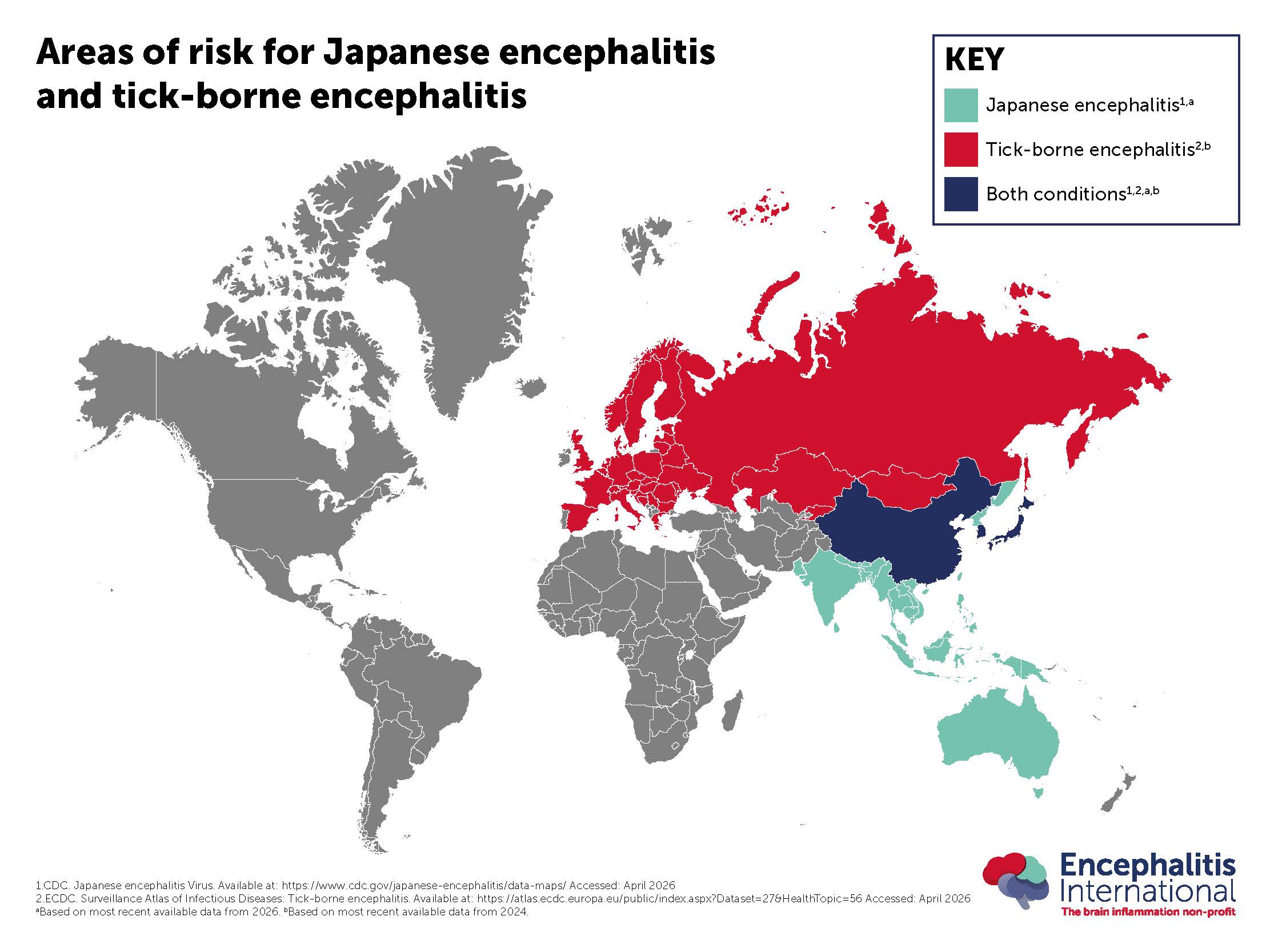
Many vaccines designed to prevent infectious diseases—including those that can lead to encephalitis (e.g., Japanese encephalitis, tick-borne encephalitis, measles, mumps and rubella)—require completion of their courses to offer full protection. Evidence from healthcare partners and recent academic studies shows concerning drop-off rates between first, second, third, and booster doses of many routine vaccines. This trend leaves individuals, families, and communities vulnerable to preventable illnesses and outbreaks.
In addition to in-country vaccination programs, travellers must also think about their vaccination scheduling – healthy travel starts before you leave home. Completing the recommended vaccination schedule—and ensuring you’re up to date on travel-specific vaccines—protects you from serious infections abroad and helps prevent their spread when you return.
————————————————————————————————————–

Financial support to develop information and awareness resources has been provided to Encephalitis International by Bavarian Nordic for materials relating to the World Immunization Week 2026 campaign.
Calls to Action
Encephalitis International is urging individuals, parents, and caregivers to:
- Review their vaccination records and complete any missed doses.
- Speak to their healthcare provider about their protection status.
- Share campaign materials to raise awareness during World Immunization Week.
Healthcare professionals, educators, and media partners are invited to join the campaign and help promote the essential message that full vaccination saves lives!
World Immunization Week: Why Every Dose Matters
By Dr Ava Easton MBE, Encephalitis International
Each year, World Immunization Week (24th – 30th April) is an important moment to pause and reflect on one of the most effective tools we have in global health: vaccines. In my work with Encephalitis International, I have seen first-hand how devastating brain infections can be, not just in the acute phase, but in the months and years that follow.
Prevention is always better than cure, and in many cases of encephalitis, prevention is possible. However, there is a critical point that is often missed: starting a vaccination schedule is not enough. Just as we are advised to complete a full course of antibiotics to properly treat a bacterial infection, vaccines also need to be completed to provide full and lasting protection. To be properly protected, vaccination schedules must be completed.
Full blog on Psychology Today site.

Complete Your Vaccination Course: A Key Step in Preventing Encephalitis. Podcast with Prof Lance Turtle
In this podcast episode we explore why completing your full vaccination schedule is important for protecting against infectious diseases and encephalitis.
Prav Prathapan, from Encephalitis International, is joined by Prof Lance Turtle, an expert in infectious diseases, who explains how vaccines work, why multiple doses matter, and the risks of stopping just after one shot. Learn how vaccines not only protect individual, but also help reduce the global burden of these infectious.
“This podcast episode was developed by Encephalitis International and funded through a restricted grant from Valneva. Valneva had no influence over the content.”

Surviving Tick-Borne Encephalitis: Bill’s Story & Why Vaccination Matters
In this episode of the Encephalitis Podcast, Prav from Encephalitis International speaks with Bill, an endurance athlete who shares his powerful journey through tick-borne encephalitis (TBE). From competing in swim-run events across Nordic countries to facing severe neurological symptoms and a long recovery, Bill’s story highlights how unexpected and serious this virus can be.
As part of World Immunization Week, this conversation sheds light on the risks of TBE, the challenges of recovery, and the importance of vaccination for those traveling to or active in endemic regions. Bill also offers honest insights into life after encephalitis and practical advice for others affected.