



Autoimmune Unknown Encephalitis – Guilherme’s Story
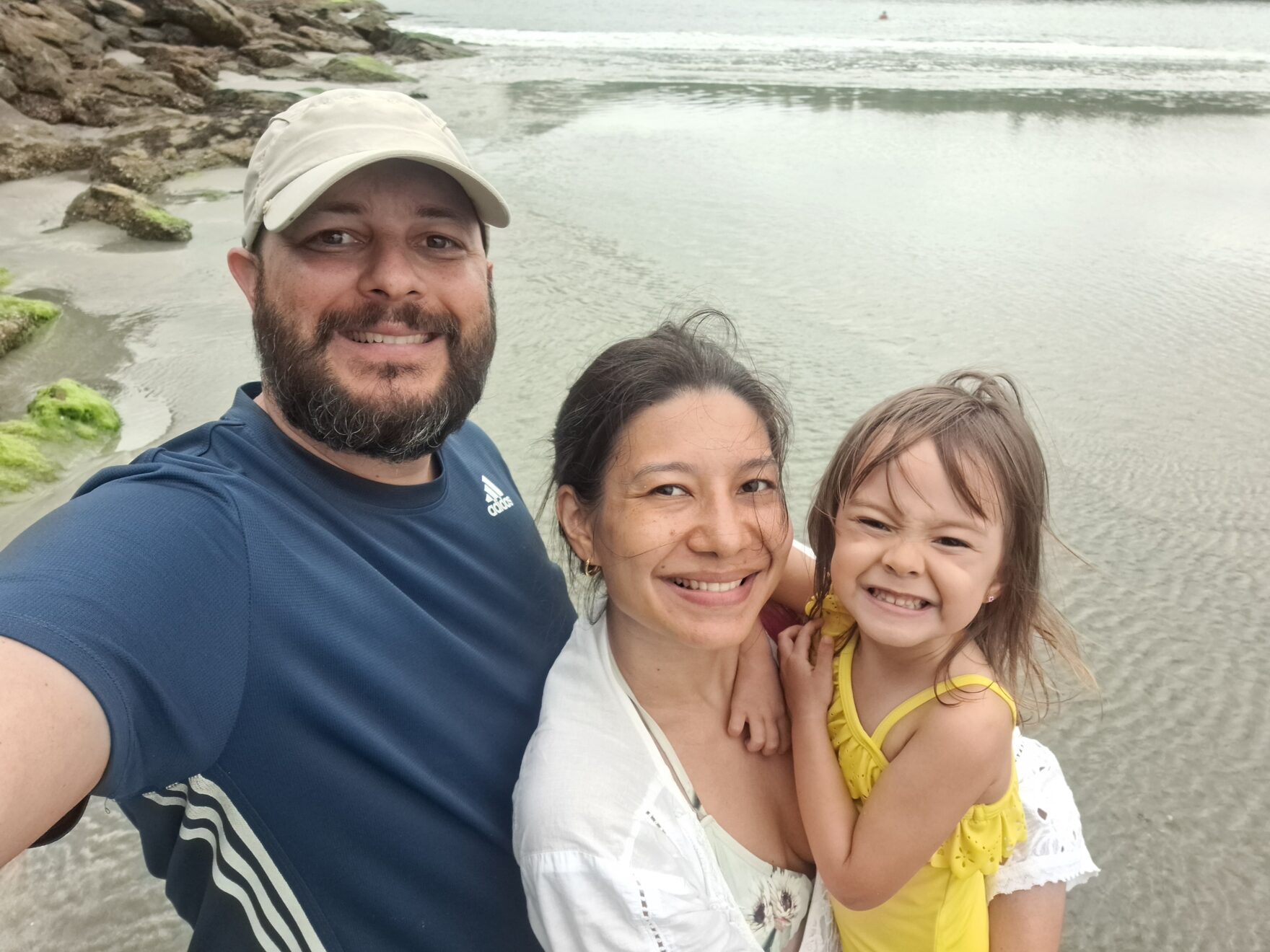
My name is Guilherme, a military service member in the Brazilian Navy since 2000
The Onset of Symptoms
On an ordinary workday during an on-call shift, I began experiencing severe headaches, loss of speech, numbness throughout my body, and loss of movement in my arms. Suspecting a stroke, they rushed me to the hospital by ambulance, performed tests, administered corticosteroids and painkillers, and attributed it to stress, as I had been dealing with a heavy workload. This repeated itself several times, and the outcome was always the same: corticosteroids and painkillers; my symptoms would improve, and I would be discharged.
Until one day I called my wife asking her to take me to the hospital because the headache was unbearable; after that, I remember nothing else. According to what I was told, my wife found me disoriented on the street, with my hands on my head and unable to speak. Upon arriving at the emergency room, I imagine I became very agitated and resisted treatment; on that occasion, they had to physically restrain me and administer high doses of sedatives to manage the situation. They diagnosed me with a psychotic episode and were even preparing to transfer me to a specialized psychiatric hospital. My wife, along with my superior officer who had come to the hospital, intervened and asked the physician on duty to investigate further before finalizing that diagnosis. The result of the investigation: a complete blood count showing a subtle change in white blood cells and a lumbar puncture showing significant abnormalities.
When I woke up and regained consciousness, I was in the intensive care unit (ICU). After a few days in the ICU to investigate the cause of my symptoms which were suspected to be viral or bacterial meningitis, though still without a definitive diagnosis, I was discharged with medications and referrals to specialists in search of a diagnosis.
This process which involved a provisional diagnosis of meningitis, severe headaches accompanied by loss of speech, numbness, loss of strength, and subsequent hospitalizations for further testing occurred many times, totalling 8 lumbar punctures.
Search for Answers
After that, the struggle for a diagnosis continued: I saw various medical specialists, and every now and then, I would present the same symptoms, be taken to the hospital, undergo new tests, but remain without a conclusive diagnosis, receiving only medications to manage the pain. About a year after the first crisis, during one of many investigative appointments, a rheumatologist who evaluated me listened to my account, mentioned he had seen a similar case, and recommended that I see a specific neuroimmunologist. When I saw her, everything made sense: she listened to my entire story and, combined with my test results, suspected autoimmune encephalitis. The search for an even more precise diagnosis began; however, because a year and a half had passed since the initial onset, tests could not pinpoint the exact immunoglobulin attacking my brain, resulting in a diagnosis of non-specific autoimmune encephalitis.
Treatment and Recovery Challenges
From that point on, with my wife’s support, we moved forward with treatment. How did I feel? I remembered nothing of what happened to me during the crises. Due to prolonged corticosteroid use, I was approximately 30 kg overweight, suffered from frequent cramps, unbearable bodily tremors, tachycardia, sleep disturbances, severe short-term memory impairment, and intense headaches. I couldn’t write properly, nor could I remember or perform simple cognitive tasks; over time, I began recovering at a snail’s pace.
Today, after the lengthy treatment regimen instituted and adjusted by the neuroimmunologist, I feel much better, though I still do not have the same cognitive capacity as before. I experience occasional episodes of imbalance, tremors, sleep disturbances, and cramps. Any task requiring higher mental effort causes total exhaustion; I cannot complete tasks at the same speed, nor can I memorize numbers or passwords. I had to adapt and learn to write everything down to remember, and I do not feel capable of performing many basic activities, such as returning to my previous job or driving; I also remain highly sensitive to loud noises, and bright lights leave me confused, for example. I no longer go out alone, as I never know when another crisis might occur (the last one was 6 months ago). Considering everything that happened, I am alive and grateful. I continue adapting to my new reality and to the medications that keep me stable. I have a daughter who is 5 years old as of the writing of this account, and I will be able to watch her grow.
Raising Awareness and Medical Guidance
Whenever I have the opportunity, I share my condition so that others, including medical professionals, become aware of this disease. Many specialists I saw referred me elsewhere because they were unfamiliar with the condition and often were unwilling to monitor my situation or my clinical picture.
Acknowledgments
I would like to take this opportunity to express my gratitude: to my wife, who carried my burden and often had to keep me fighting all by herself when I couldn’t understand what was happening; to my neuroimmunologist, who diagnosed me and remains attentive not only to my medical treatment but also to the difficulties I faced after starting treatment, always extremely supportive; and to the neurosurgeon, who frequently monitored my condition during the moments I needed hospital support before the start of my treatment for autoimmune encephalitis.
Get help
Our support team are available from 9am to 5pm (GMT), Monday to Thursday, and 9am to 4.30pm (GMT) on Fridays.
To get in touch, simply call +44(0)1653 699599.
Contact our helpline