



Herpes Simplex Virus Encephalitis – David’s Story
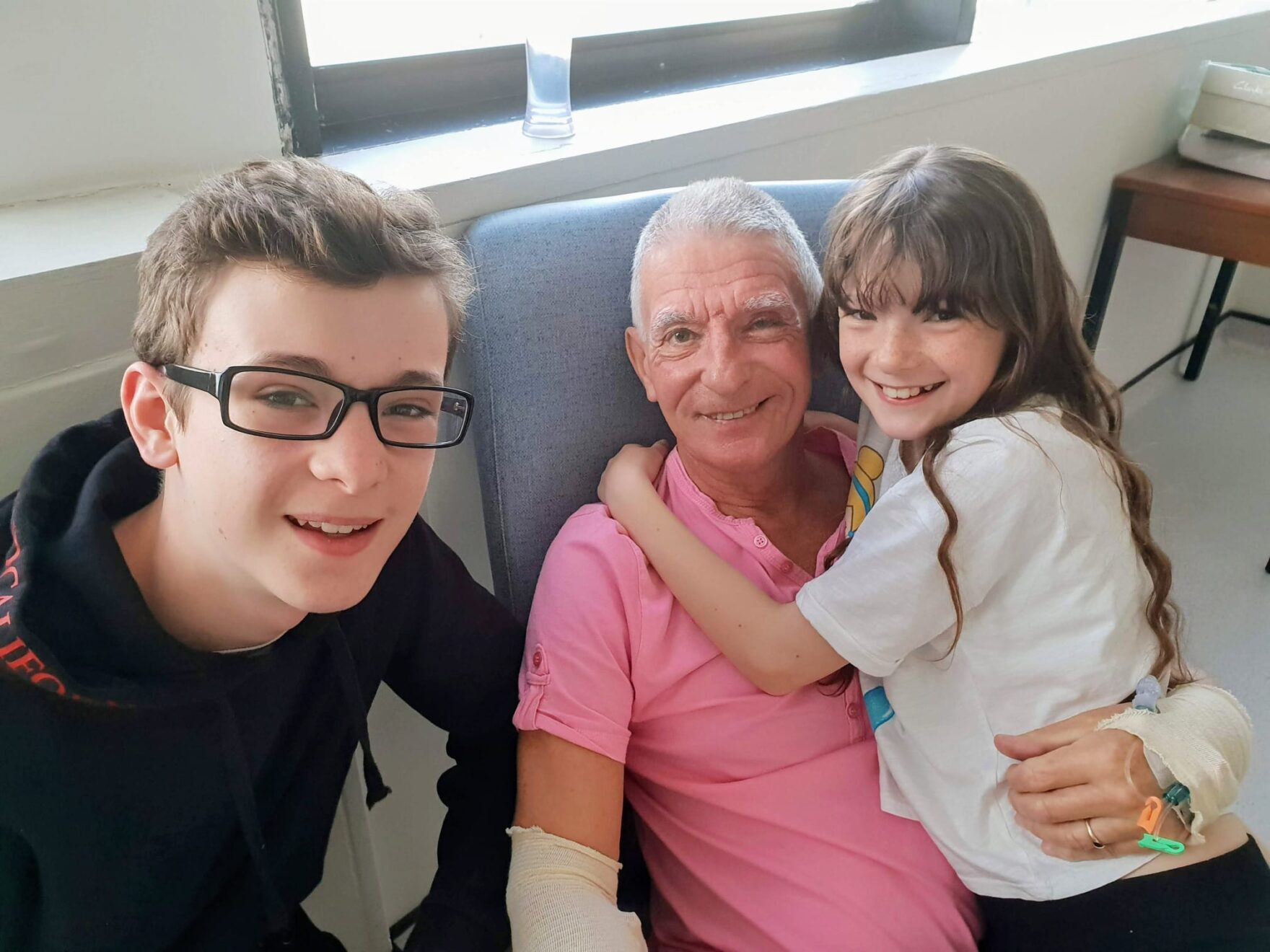
A sudden illness, a life-changing diagnosis, and the long road after encephalitis
The first signs
It was a lovely sunny day in June 2018. My husband, David, woke with a headache and decided to go back to bed (very unlike him) He woke up and said we should go into town, he did say he didn’t feel well but nothing extreme.
We went into a big store into the food department, and he went off looking around, he then caught up with me and started trying to explain something to me, but it made no sense.
Finally, we left the shop with things we had bought, but on the way home he didn’t appear to know where he was going and he was acting very strangely which was very scary, I had to practically lead him home and he wasn’t making any sense.
Getting help
When we got home, he went off to “look for something”. Now, I was very worried and called an ambulance and my children. When they arrived my husband didn’t know who I was. The paramedics thought he just had an infection, but they took us to the local hospital as a precaution. This was dreadful because they were busy and my husband was left in a cubical for a very long time. He was finally triaged on the telephone, and it was decided he had had a stroke.
We were then put into another ambulance and taken to a stroke hospital, by the time we arrived it was very late. They tried to see if he could eat by giving him a biscuit, but I informed them he was coeliac. They had nothing gluten free.
He had a CT scan then we were told he would have a MRI but probably first thing the next day. I had to leave him there, it was awful, he had no signs of a stroke so I was so worried what was wrong with him.
The next day I arrived and spent hours begging for an MRI, they were treating him for a stroke, asking him questions, seeing if he could walk.
Diagnosis and treatment
When the results of the MRI came through the consultant said it looked as if he had an infection on his left temporal lobe, so as well as treating him for a stroke they had decided to give him the anti-viral medication – which saved his life and saved the infection from spreading further in his brain. A lumbar puncture confirmed his Herpes Simplex Virus encephalitis diagnosis.
Coming home and recovery
It was a dreadful three weeks because he was in a stroke ward where they had no idea how to treat him. He fell and banged his head. They had nothing to feed him because of his coeliac disease. We live about 20 miles away from the hospital, and I went every day with my daughter just to care for him. We got him home as soon as possible, but first he had to prove he could walk up and down stairs. When he came home, he was extremely tired and had very little energy, although he was very pleased to be home and, at first, was very nice to be around. Over time, however, his character changed completely, and he could sometimes be very difficult to live with.
Ongoing effects
He hates that his memory is not what it was. He lives with memory loss, his hearing became worse, and he does not always have much empathy. He can also become very angry, which makes day-to-day life difficult because I sometimes forget that these changes are part of his acquired brain injury.
Support after hospital
We had very little help with follow up care after he came home. I tried to encourage him to get involved with rehabilitation or specialist support, but he did not want to be treated as though there was something wrong with him. At the beginning, Encephalitis International was a fantastic help to us as a family, especially when I knew nothing about this dreadful illness.
A hope for change
I hope that more doctors begin to check on symptoms relating to encephalitis to prevent a stoke misdiagnosis. An MRI when he was at the first hospital could have led to a quicker diagnosis but I fear that because he was 71, they just assumed he had had a stroke.
My message to others
It is difficult living our new lives with his acquired brain injury and he feels so angry as a result of this. If I could say one thing to someone newly affected by encephalitis, or to anyone worried about someone who is acting very differently, it would be this: say the word encephalitis to the doctor so they can try to rule it out early.
Written by Marica
If you would like to speak to our support team about encephalitis, please contact our helpline.
Story published September 2026
Get help
Our support team are available from 9am to 5pm (GMT), Monday to Thursday, and 9am to 4.30pm (GMT) on Fridays.
To get in touch, simply call +44(0)1653 699599.
Contact our helpline