
Autoimmune / Rasmussen’s Encephalitis – Salomé’s Story – Spanish and English
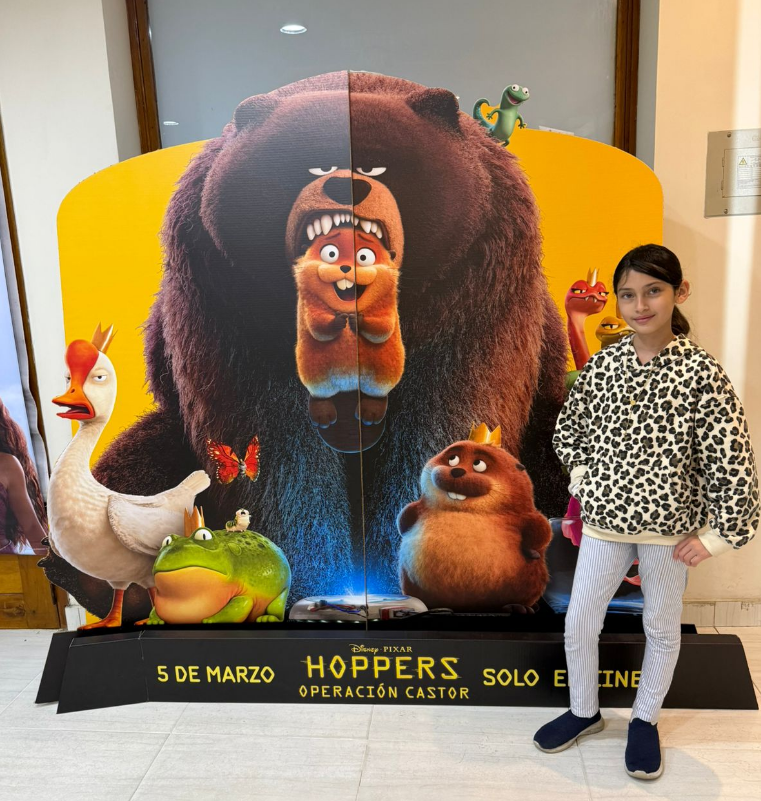
Mi nombre es Zulay y soy la mamá de Salomé. Mi hija tiene 10 años y fue diagnosticada con encefalitis de Rasmussen este año, en 2026.
Diagnóstico y primeros síntomas
Somos de Arauca, Colombia, y Salomé ha crecido allí. Todo comenzó en diciembre de 2024, cuando, como de costumbre, viajé a Pamplona, Colombia, para pasar la Navidad con mis hermanas.
Un día, Salo presentó un dolor de cabeza leve y dijo que sentía picazón. Le manejé el dolor de cabeza con acetaminofén. Días después fuimos a la piscina y mi sobrina notó que Salomé tenía una posición extraña en la mano derecha. También le pareció que su pie no estaba normal. Al regresar, mi sobrina la llevó donde los terapeutas de su hijo. Después de revisarla, dijeron que, para ellas, parecía tratarse de algo neurológico y recomendaron que la valorara un especialista.
Luego viajé a Valledupar, Colombia, para pasar el fin de año con mi papá, y Salomé empeoró. Su movilidad del lado derecho se vio bastante afectada y fue hospitalizada. Tras casi un mes en hospitalización, recibió tratamiento con prednisolona, además de terapias físicas y ocupacionales. Así transcurrió todo el 2025.
A finales de ese año volví nuevamente a Pamplona para verme con mis hermanas, pero ellas, junto con mi sobrina, seguían insistiendo en que Salomé no estaba bien. La llevamos de forma particular a Bucaramanga, Colombia, para que la viera una neuróloga. Ella solicitó exámenes, realizó revisiones y pidió que Salomé fuera internada de urgencia.
Salomé no presenta ninguna otra sintomatología: no convulsiona y no ha tenido pérdida de visión en el lado derecho afectado, aunque algunas veces presenta dificultad para hablar. Su movilidad está afectada, pero no al punto de impedirle caminar. Por esta razón viajé a Bogotá, Colombia, donde fue internada. Allí le realizaron muchísimos exámenes y resonancias. Se descartaron tumores y trombos, y se evaluaron su líquido cefalorraquídeo, médula y otros aspectos. Finalmente, se determinó que tiene una encefalitis atípica tipo Rasmussen.
Tratamiento y recuperación
Ha sido un proceso largo, que me ha costado entender y asimilar, pero he visto la valentía de mi hija y la grandeza de Dios. Salomé no ha empeorado más y tiene la gran ventaja de que no convulsiona. Ahora está con tratamiento de inmunoglobulina y se le realizó plasmaféresis. Continúa en terapias y ya tiene un poco más de fuerza en la mano.
Compartir nuestra experiencia
Me gustaría que conocieran nuestra historia y también conocer otras, porque este camino no ha sido fácil. Sé que, al compartir nuestro testimonio y apoyarnos entre todos, podemos ayudar a impulsar investigaciones y apoyo para otros niños con este diagnóstico. Cada niño es único, pero nos une este camino.
English translation
Diagnosis and first symptoms
My name is Zulay, and I am Salomé’s mother. My 10-year-old daughter was diagnosed with Rasmussen’s encephalitis in 2026. It all began in December 2024, when, as usual, I travelled to Pamplona, Colombia, to spend Christmas with my sisters.
One day, Salo had a mild headache and said that her body was itchy. I managed the headache with pain relief. A few days later, we went to the pool, and my niece noticed that Salomé was holding her right hand in a strange position. Her foot also did not seem normal. When we returned, my niece took her to her son’s therapists. After checking Salomé, they said they thought it was something neurological and advised that she should be seen by a specialist. I then travelled to Valledupar, Colombia, to spend New Year’s Eve with my dad, and Salomé got worse. Her mobility on the right side was quite affected, and she was hospitalized. After almost a month in hospital, she received treatment with prednisolone, as well as physical and occupational therapy. This continued throughout 2025. At the end of the year, I returned to Pamplona to see my sisters, but they and my niece continued to insist that Salomé was not well. We took her privately to see a neurologist in Bucaramanga, Colombia. The neurologist requested tests, carried out examinations, and asked for Salomé to be hospitalized urgently. Salomé does not have any other symptoms: she does not have seizures, and she has not had any loss of vision on the affected right side, although she sometimes has difficulty speaking. Her mobility is affected, but not to the point where she cannot walk. For this reason, I travelled to Bogotá, Colombia, where she was hospitalized and had many MRI scans and other tests. Tumours and blood clots were ruled out, and her cerebrospinal fluid and spinal cord were evaluated. Among other findings, it was determined that she has atypical Rasmussen’s encephalitis.
Treatment and recovery
It has been a long process, and it has been difficult for me to understand and come to terms with everything. But I have seen my daughter’s courage and the greatness of God. Salomé has not worsened further, and she has the great advantage that she does not have seizures. She is now receiving immunoglobulin treatment and has had plasmapheresis. She is continuing with therapy and already has a little more strength in her hand.
Sharing our experience
I would like people to know our story and to hear other stories too, because this journey has not been easy. I know that, by sharing our testimony and supporting others, we can help encourage research and support for other children with this diagnosis. Each child’s experience is unique, but we are united by this journey.
If you would like to speak to our support team about encephalitis, please contact our helpline.
Story published October 2026
Get help
Our support team are available from 9am to 5pm (GMT), Monday to Thursday, and 9am to 4.30pm (GMT) on Fridays.
To get in touch, simply call +44(0)1653 699599.
Contact our helpline