
Autoimmune Encephalitis – Maria’s Story
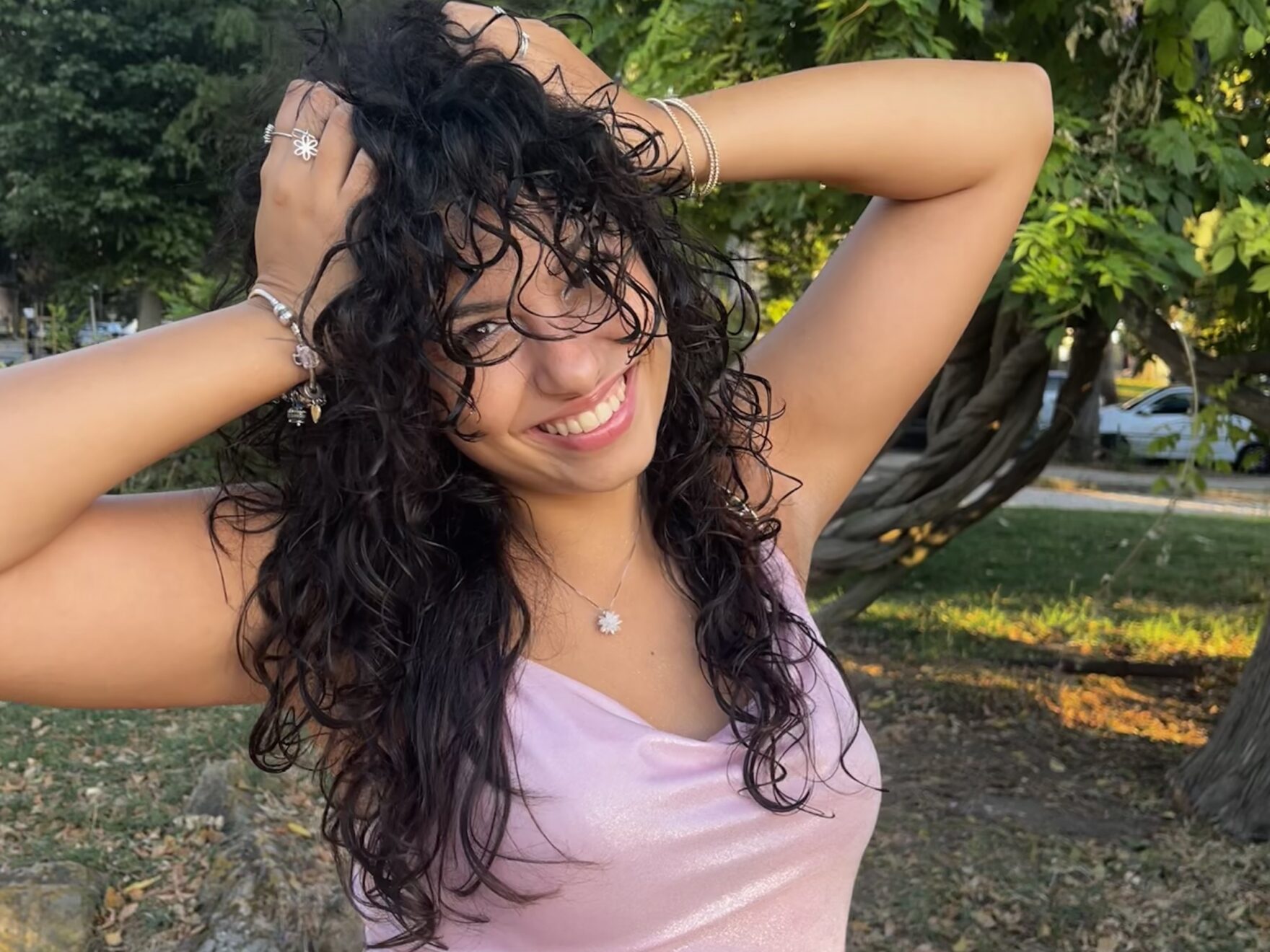
My story begins July 2024, aged 22. The day I was leaving for vacation with my best friend and my parents. It was supposed to be lighthearted: sea, summer, fun.
How it began
Already during the night of July 23rd, I started experiencing a mild headache. I suffer from migraines, so I didn’t worry. During the trip, the pain was much stronger than usual, but I blamed it on the car’s air conditioning.
On the night of July 24th, I vomited twice. I thought it was just a temporary discomfort. The next morning, I woke up with a fever. A fever that would not leave me.
It reached 39.6°C and 39.8°C (103–103.6°F). The only thing that brought it down was paracetamol. Without it, it was constant torment: my head felt like it was on fire, I couldn’t walk properly, I was staggering. I wasn’t eating, I was dehydrating. Only intravenous saline and paracetamol helped. The relief lasted only as long as the medication’s effect.
After a few days, I was taken to the hospital by ambulance: extremely high fever, difficulty speaking, unstable walking. Yet, after the tests, I was sent home. My vital signs were normal. They told me it was probably a bacterial infection and prescribed antibiotics.
The situation did not improve.
Towards the end of July, I returned to the hospital. I remember little from those days: the fever was extremely high, I was confused, I was no longer independent. I was admitted to the infectious diseases ward, where they began more in-depth investigations. Despite everything, I still appeared “healthy” in routine tests. But I was getting worse.
I was constantly cold, I could no longer walk, I couldn’t urinate, and a catheter was placed. On August 2nd, I had a lumbar puncture. Some results were abnormal. On August 7th, an MRI showed brain inflammation.
From there, everything goes dark for me.
On August 9th, as I later read in my medical records, I had a severe epileptic seizure. I don’t remember anything. My brain activity was compromised, my oxygen saturation had dropped, and my neurological score was 7 out of 15.
I was urgently transferred to the intensive care unit (ICU), intubated, and placed in a medically induced coma.
The doctors did not have a clear diagnosis. My case was a mystery. No virus or bacteria was identified. Guillain-Barré syndrome was even considered. I was given immunoglobulins, temporarily stopped due to kidney issues, then resumed.
On August 14th, 2024, I was awakened.
I consider this my second birthday.
I have a total void between August 7th and 14th – a week completely erased. On August 15th, I was still in the ICU. On August 16th, I was transferred to the neurology ward.
The fever was gone. The headache was gone. But I could not walk. I had no muscle strength. I still had catheters and depended on others for every need. I was no longer independent.
On August 19th, they tried to get me back on my feet. From that day, I slowly began to improve. I gradually stopped needing oxygen and continued corticosteroid therapy.
At the end of August, I received a steroid pulse: one gram of cortisone daily for five days. My body changed rapidly. I left the hospital very thin; after the cortisone, I gained about ten kilograms in a short time. Swelling, stretch marks, a face I no longer recognized.
I was discharged on September 6th, 2024, with a non-definitive diagnosis: autoimmune encephalitis, with a suspected rare neuroinflammatory syndrome (Clippers Syndrome, 60 cases worldwide).
I didn’t yet know that the hardest part was about to begin.
Returning home didn’t mean I was healed. It meant facing the fear I had left in others. My illness didn’t only affect me: it had shaken my entire family. In my parents, grandparents, uncles, aunts, and cousins, I could still see the mark of those days. It was as if the trauma had spread to all of us.
Then there was facing myself.
I didn’t recognize my body. I was swollen from cortisone, I had gained weight rapidly, had stretch marks. I moved slowly, with effort. I felt fragile, scared, almost old, even though I was in my early 20s. It wasn’t just about appearance; it was the feeling of no longer inhabiting my own body.
I returned to Rome in October. Being away from the place where it all happened helped me. I chose to go back to university quickly, resume exams and routine. I needed normality.
Today, I have resumed my life. I study, take exams, plan my future. But something remains: an epileptiform lesion. I take high-dose antiepileptic therapy, which causes drowsiness, concentration difficulties, and a constant need for rest. I still cannot drive. I have frequent check-ups: MRI every six months, EEG every three.
I live with uncertainty.
Not having a definitive diagnosis means living with doubt: could it happen again? When? In what form? ncephalitis was defined as autoimmune, with the suspicion of an extremely rare neuroinflammatory syndrome. This means recurrence is possible. Even epileptic seizures, despite medication, cannot be entirely excluded.
There are real limitations. I cannot take hormonal contraceptives because they interfere with antiepileptic drugs. I must be careful with any medication. Even personal and intimate aspects of life have been affected.
Today, I face this situation with gratitude. I try to stay positive, knowing that step by step, one comes through difficulties. The love and support of those around us is an enormous strength. We cannot control everything that happens, but we can control our reactions. I have approached this experience actively and positively: not as something to passively endure, but as a challenge to meet. I can only do what is in my power to improve the situation.
Of course, I have negative moments, like anyone, but the difference is in how I react. I push away negative thoughts and focus on the positive. I live with uncertainty: I know a seizure could happen at any moment. And that’s okay. I can’t change it, so I choose to fully experience the positive moments and life itself. I’ve learned that time is limited, and we cannot spend our lives worrying about what might happen. Life is fragile, and that is what makes it beautiful.
Keeping positive
As Pascal said, man is “a thinking reed”: he bends with the wind, but does not break. It is our way of responding to misfortune that determines our resilience. I learned this the hard way: the months I let negative thoughts overwhelm me were very dark. Changing perspective, focusing on the positive, made all the difference.
So my advice is: stop getting stuck in life’s negative loops. Look for what is positive, and reduce stress. A life focused on the positive really makes a difference.
Encephalitis is a severe, painful illness, but it can be faced. I consider myself a soldier: I fought my battle, and today I am here, alive, aware, and ready to live every day to the fullest.
If you would like support or information or connect with others, please contact our helpline.
Story published March 2026
Get help
Our support team are available from 9am to 5pm (GMT), Monday to Thursday, and 9am to 4.30pm (GMT) on Fridays.
To get in touch, simply call +44(0)1653 699599.
Contact our helpline