



LGi1 Autoimmune Encephalitis – Steve’s Story
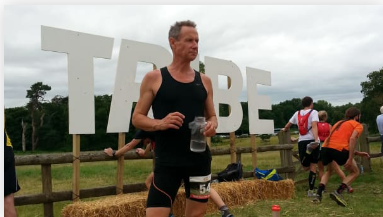
Steve, a vibrant, active and determined person whose love of life, sport and people shone through even in the face of a devastating illness.
In 2023, Steve wrote his lived experience story of encephalitis. Sadly, in 2024 Steve passed away. Here we share his story along with a tribute from his friend, Lisa.
Steve’s story (2023)
My name is Steve and I work as a trainer within a social services setting. This is my experience of LGi1 autoimmune encephalitis.
I’ve always been very active – running marathons, surfing, swimming, cycling, and playing various sports. I share this to show I was fit, healthy, and far from sedentary.
Towards the end of 2018, I started to feel “different.” I had headaches, disturbed sleep, vivid dreams, and, I’m told, increasingly odd behaviour at work. Without a journal I later found, I would have no memory of the onset of what turned out to be a brain disease I’d never heard of.
In mid-October, a colleague took me to hospital as my behaviour had become very bizarre. I was turning up to deliver training that didn’t exist and had become unusually obsessed with work – completely unlike me.
I can’t tell you anything about the end of 2018. I have no memory of my two months in hospital – what I call the “Dead Zone.” Staff later recognised me and were delighted to see my recovery, which felt surreal given I remembered none of them.
I underwent many tests, mostly normal or inconclusive, which is typical for this condition. I lost 11 kilos and slept most of the time. I’m told I repeatedly tried to leave the ward and was placed under a Deprivation of Liberty order for my safety.
My friend Lisa later told me there was a point where staff were seriously concerned I might not wake up. Friends who visited found me confused, talking nonsense, or unresponsive. I remember none of it.
Thankfully, I responded well to treatment. I gradually became more alert and could recall basic information like my name. From there, doctors began assessing the extent of the damage.
I was transferred to a rehab unit in Woking for two months. I don’t remember arriving, but by December I began to regain awareness. Being physically weak and unable to run was incredibly difficult to accept.
I briefly regained the ability to read – something I had always loved but now have no interest in it at all, which reflects how much this illness can change you.
After Woking, I was moved to a London hospital for further treatment. I spent weeks there feeling emotionally numb, staring out of the window while waiting for treatments that were often delayed. My friends kept me going through regular visits.
I must say, from the bottom of my heart, the nursing staff across all hospitals were incredible. We do not value the NHS enough.
At home
I was discharged on 12th March 2019 to an empty house and a level of loneliness I had never known. Sleep remains difficult – sometimes I’m exhausted early, only to lie awake for hours.
Over a year on, I still often feel lost. I don’t have close family, so my friends are essential – I genuinely don’t know how I would cope without them.
I’ve returned to work gradually, but pushing beyond part-time quickly leads to fatigue and worsening symptoms.
The hardest symptoms are the seizures – what I call “absences.” They last seconds, where I drift away while still functioning, but they are frightening. Even now, it’s hard not to fear something more serious might happen when I’m alone.
Living with the condition
Despite everything, I’ve managed to return to some activities – running parts of marathons, swimming, surfing, and playing tennis, though not as much as I’d like.
However, I now struggle with crowds, noise, travel, and many things I once enjoyed, including music and social situations. Anxiety, insomnia, mood changes, and disinhibition are all part of this condition.
Emotionally, I’ve changed a lot. I cry almost daily, which I’ve come to accept. I no longer enjoy many of the things I used to, and my tolerance for noise and stimulation is low.
In the early days, I felt like I was on the verge of some great revelation, but I now understand that was just part of the illness. This condition is rare and not well understood, which can make it isolating.
Reflection
I am incredibly lucky to have supportive friends and organisations like Encephalitis International. Their understanding and support have been invaluable.
After a year, I am far from “recovered” and continue trying different treatments. You will not be the same person you were before – but whether that is entirely a bad thing is something I still question.
When people say I’m becoming more like the “old Steve,” part of me resists that. I have changed and perhaps that’s something I am still learning to accept.
On this page, Lisa shares a tribute to her dear friend, Steve. Followed by Steve’s own experience which he wrote in 2023 before sadly passing away in September 2024.
Tribute to Steve
Steve’s friend, Lisa, shares a tribute and story of Steve below:
From Lisa – The start
Looking back, there were signs from as early as July 2018 (writes Lisa). After completing a half marathon, Steve described his calf muscles as constantly twitching, like “bags of snakes.” He had vivid dreams, poor sleep, and unusual stress about work.
He later developed dizziness, nausea, and a strange, pleasant sensation in his chest. GP tests, including bloods and heart checks, were normal, and he was prescribed propranolol and sleeping tablets.
October 2018 – Sudden memory loss
One evening, Steve left me confused messages he couldn’t remember sending. When I saw him, he didn’t know the time or what he had done that day.
At hospital, scans and tests were normal, and anxiety was suspected. He refused admission and was referred to mental health services. Over the next few days, his behaviour fluctuated-sometimes normal, sometimes strange. He developed stuttering, odd movements, and confusion about time.
One night at 3am, he came to my door wanting to drive to work, unable to distinguish night from day. He slept very little and acted out dreams. In hindsight, something was clearly wrong, but symptoms were inconsistent and side effects from his new medications could explain them.
Mid October – Admission to hospital
A week later, after more unusual behaviour, Steve returned to A&E. Initially, dementia was suggested.
A breakthrough came when low sodium levels were found. He was admitted and treated, but although his sodium levels improved, his confusion worsened. He wandered, tried to leave the ward, and required constant supervision under a Deprivation of Liberty order.
With no clear cause, anxiety was again considered, and sectioning was discussed.
Then, nearly two weeks after admission, an EEG revealed seizures. An MRI showed brain inflammation-encephalitis. Further antibody testing, confirmed LGI1 autoimmune encephalitis
Whilst waiting for the results of the antibody tests, Steve deteriorated significantly; losing weight, strength, and memory. He became increasingly confused, struggled with basic tasks, and sometimes did not recognise friends.
November – Treatment
One day he became very difficult to rouse, and doctors started intravenous steroids before the confirmation of diagnosis.
The effect was dramatic – he became more alert, stronger, and cognitively improved. However, his confusion remained, and he often believed he was at work training the staff and fellow patients.
He then received IVIg treatment, which helped somewhat, though his memory remained severely impaired. Despite daily interactions, he could not remember the doctor or retain recent information.
With some improvement, he was transferred to a neuro rehabilitation centre after a second IVIg course.
Christmas to March – Rehabilitation and further treatment
After about two months, his confusion improved, though short-term memory problems persisted. He used a diary to track daily events.
Rehabilitation was challenging-he was frustrated by reduced fitness and aware of his cognitive difficulties. Gradually, with support, his memory improved and he began rebuilding his independence.
However, his seizures worsened. Following further assessment, he was transferred to St George’s for plasma exchange treatment, completing two rounds. He continued to improve, though the exact impact of this treatment was unclear.
Mid-March 2019 – Home coming
After five months in three hospitals, Steve returned home. It was an emotional moment-earlier, it had seemed unlikely he would live independently again.
In the first months, he experienced anger and emotional changes, but over time his personality and sense of humour returned.
A year after admission
Steve still experienced seizures, though far fewer than before. He continued treatment, including mild chemotherapy to suppress his immune system.
He found crowds difficult and was more impulsive. He returned to part-time work and regained his fitness, even completing the Beachy Head marathon a year after admission.
In memory
Reading Steve’s story again, makes me realise the progress he continued to make after it was written. He came off all his medication and was seizure free for a couple of years. He rediscovered his love of reading and would regularly jump on the train to play tennis with his friends. His anger and anxiety were much improved, and I can honestly say that he was more content than he had ever been.
About a year before Steve died, he developed new seizures which were at times quite violent. His consultant tested him to see if he had suffered a relapse of his autoimmune encephalitis, but the results were negative. It was thought that the seizures were most likely related to scar tissue from his original illness.
Steve passed away peacefully in his sleep, and his consultant believed it was likely due to a seizure.
I am so proud of Steve, not just for the amazing legacy that he left in his will (to Encephalitis International and several other charities), but for how he rebuilt his life after encephalitis. He returned to the sports he loved, created new music, made many new friends and travelled abroad. Incredibly, he regarded his experience of a devastating illness as an opportunity for personal growth. He made huge progress emotionally, successfully calming the anger and embracing with humour the pathological tearfulness that made him cry at the smallest of things. I know he felt indebted to Encephalitis International for supporting him in his new life. He was much loved by his many friends and will be hugely missed. His legacy is one of supporting others impacted by encephalitis, and the wider causes he cared for
Steve is remembered for his determination, his energy, and his love of life and the outdoors. His story continues to raise awareness of autoimmune encephalitis and the profound impact it can have, not only on those diagnosed, but on the people who care about them.
If you would like more information about leaving a legacy, please visit our Gift in Will page.
Story Published April 2026
Get help
Our support team are available from 9am to 5pm (GMT), Monday to Thursday, and 9am to 4.30pm (GMT) on Fridays.
To get in touch, simply call +44(0)1653 699599.
Contact our helpline